

 Open today
Removing a scrap car might look simple on the surface, but professional car removal follows a structured and carefully managed process. From safety checks to environmental compliance, each step is designed to ensure the vehicle is removed legally, responsibly, and with minimal hassle for the owner. In a busy city like Melbourne, where space, regulations, and sustainability matter, professional scrap car removal is far more than just towing a vehicle away.
Here’s a clear look at the steps professionals follow during car removal in Melbourne.
Step 1: Initial Assessment and Vehicle Details
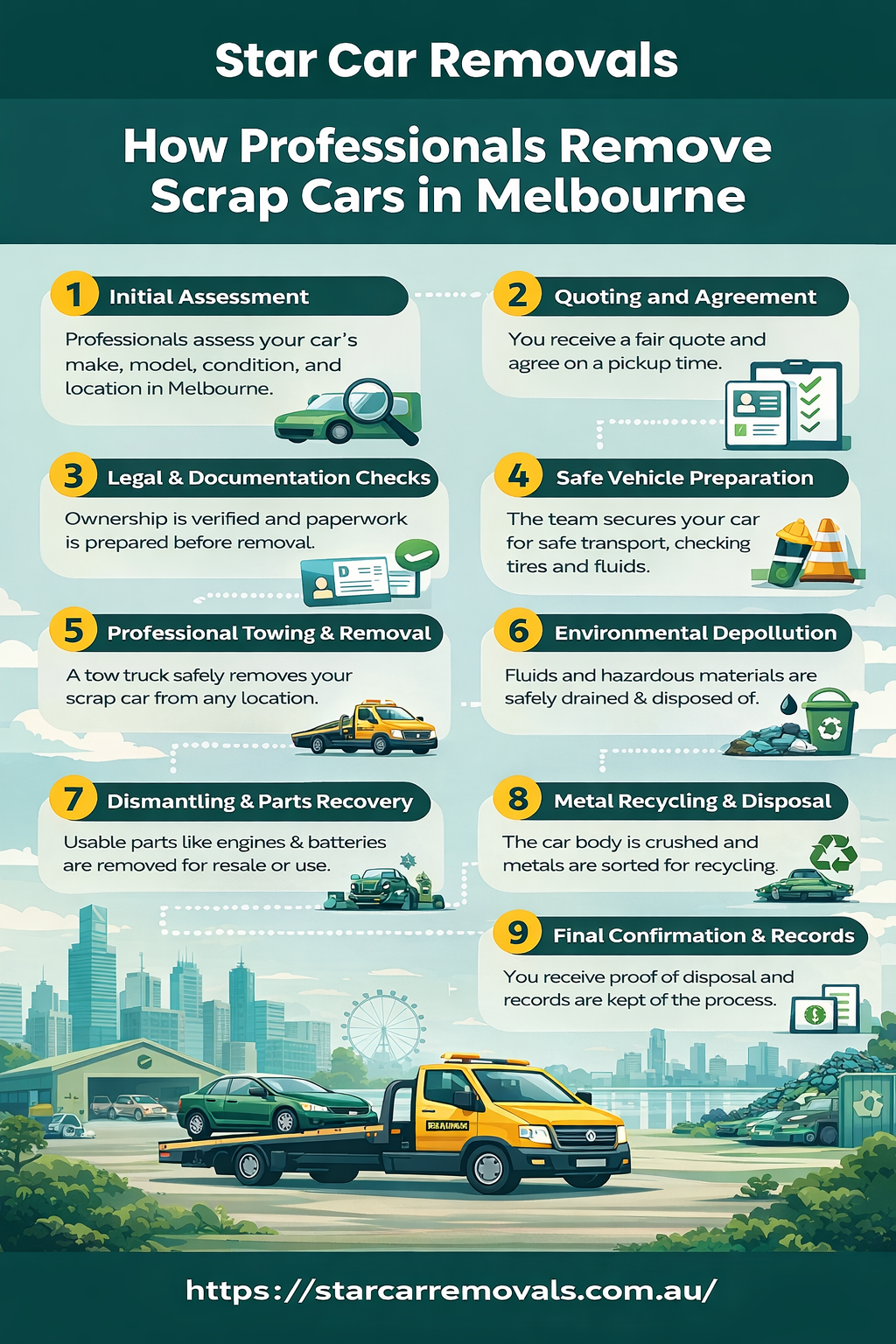
The process begins with collecting essential details about the vehicle. Professionals assess the car’s make, model, age, condition, registration status, and location. This information helps determine the vehicle’s scrap value and the best removal approach. In Melbourne, access conditions such as parking restrictions or narrow streets are also considered early to avoid delays on removal day.
Step 2: Quoting and Agreement
Once the assessment is complete, a quote is provided based on the car’s condition, demand for parts, and scrap metal value. Professional operators are transparent, explaining how the price is calculated and confirming whether towing and paperwork are included. After the owner agrees, a suitable pickup time is scheduled, often offering same-day or next-day service.
Step 3: Legal and Documentation Checks
Before carrying out scrap car removal in Melbourne, professionals ensure all legal requirements are met. This includes verifying ownership, checking identification, and preparing transfer or disposal documents. In Victoria, proper paperwork is essential to protect the owner from future liabilities such as fines or toll notices linked to the vehicle after removal.
Step 4: Safe Vehicle Preparation
On arrival, the removal team prepares the vehicle for transport. This may involve checking tyre condition, securing loose parts, and ensuring the car can be safely loaded. If the vehicle is severely damaged or non-rolling, specialised equipment such as winches or flatbed trucks is used to prevent property damage or injury.
Step 5: Professional Towing and Removal
The actual removal is carried out using purpose-built tow trucks operated by trained professionals. Care is taken to protect surrounding vehicles, driveways, and public spaces. In Melbourne’s residential areas, this step is particularly important to ensure compliance with local safety and parking rules while minimising disruption.
Step 6: Environmentally Responsible Depollution
Once the scrap car reaches the facility, professionals begin depollution. This involves safely draining fluids such as fuel, oil, coolant, and brake fluid. Hazardous materials are disposed of according to environmental regulations, helping prevent soil and water contamination. This step is critical in maintaining Melbourne’s environmental standards.
Step 7: Dismantling and Parts Recovery
After depollution, reusable parts are carefully removed. Engines, transmissions, batteries, tyres, and electronic components may be salvaged for resale or reuse. This process reduces waste and supports the circular economy by giving functional parts a second life.
Step 8: Metal Recycling and Final Disposal
The remaining vehicle shell is crushed and processed for metal recycling. Steel, aluminium, and other materials are sorted and sent to recycling facilities. This step ensures that as much of the vehicle as possible is reused rather than sent to landfill, aligning with sustainable waste management practices.
Step 9: Final Confirmation and Record Keeping
Professionals maintain records of the removal and recycling process. This provides proof of lawful disposal and ensures compliance with industry and environmental regulations. For vehicle owners, this final step offers peace of mind that the scrap car has been handled responsibly from start to finish.
In Conclusion
Professional scrap car removal in Melbourne is a structured process built around safety, legality, and environmental responsibility. By following clear steps that include assessment and paperwork to recycling, professionals ensure unwanted vehicles are removed efficiently while protecting both owners and the environment. Choosing a professional service means turning an old car into value without stress, risk, or unnecessary delays.
They assess access in advance and use flatbeds, winches, or traffic-safe loading methods. All fluids are safely drained and disposed of during the depollution process. Yes, salvageable components are inspected before being resold or reused. Yes, with prior assessment and the right equipment, professionals can manage complex locations. Licensed facilities follow Victorian regulations for waste handling and recycling. Yes, proper documentation ensures the vehicle is no longer linked to the previous owner. It prevents hazardous materials from contaminating soil and waterways. Most vehicles have a high recycling rate due to recoverable metals and parts. Vehicles are usually depolluted and dismantled soon after arrival at the facility. How do removal teams handle cars in tight Melbourne streets or laneways?
What happens if a scrap car still has fuel or fluids inside?
Are reusable car parts tested before resale?
Can a scrap car be removed from apartment parking or underground garages?
How is environmental compliance ensured during the removal process?
Does professional removal help avoid future legal issues for owners?
Why is depollution a critical step in scrap car removal?
What percentage of a scrap car is typically recycled?
How quickly is a scrap car processed after collection?
Need a Car Removal? Call Now
To remove your scrap car in Melbourne, consider Star Car Removals since we are the most trusted auto wreckers around. Dial 042 334 1349 now.

